
What japan taught me about aging
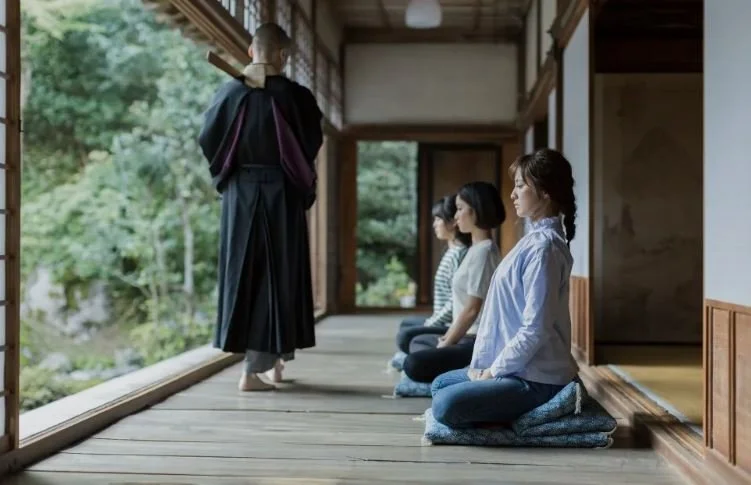
I used to accept aging as inevitable. I believed slowing down, losing energy, and watching the body change were simply what time did to us.
After traveling through Japan, that belief shifted.
In February, I spent time in Niseko, Tokyo, Kyoto, and Osaka. I went for the beauty, the food, and the culture. I did not expect to come back questioning how we age and what we have been taught to accept as normal.
Walking through cities and neighborhoods, I noticed older people everywhere. They were not hidden away or struggling to keep up. They were walking with purpose, carrying groceries, gardening, taking public transportation, and fully participating in daily life.
They were aging, but they were not declining.
Japan is home to one of the longest living populations in the world. What stood out to me was not just how long people live, but how well they live.
A Different Relationship With Age
In many Western cultures, aging is something to fight or hide. Youth is idealized, and growing older is quietly feared.
In Japan, age is not treated as a problem. Older people are respected, visible, and valued.
This mindset matters. When people believe aging means deterioration, the body often follows that expectation. Stress increases. Health declines. Energy fades faster.
In Japan, older people do not see themselves as broken or past their prime. They still see themselves as useful. That belief alone changes how the body responds over time.
Movement as a Way of Life
One of the most striking differences I noticed was how much people move without calling it exercise.
Japanese elders walk daily. They climb stairs. They carry their own groceries. They garden. They sit on the floor and stand back up again.
Movement is woven into daily life. It is not something squeezed into an hour at the gym. This kind of consistent, gentle movement keeps joints mobile, muscles active, and balance intact.
Instead of intense workouts followed by long periods of sitting, movement in Japan is natural and constant. Over decades, that makes a profound difference.
Functional Strength Built Into Daily Life
What surprised me most is that Japanese elders are strength training every day without labeling it that way.
They regularly sit on the floor rather than chairs, practicing controlled squatting and standing many times a day. This maintains leg strength, hip mobility, and balance.
Some traditional restaurants only offer floor seating. Sitting cross legged or kneeling and then standing back up requires strength, flexibility, and control. Over time, this repeated movement preserves lower body strength and joint health in a way chairs never do.
Carrying groceries by hand builds grip strength, shoulder stability, and core strength.
Gardening reinforces strength through squatting, lifting soil, digging, and carrying water.
Climbing stairs in train stations and neighborhoods strengthens the legs and supports cardiovascular health.
Even daily chores like cleaning floors, hanging laundry, and preparing meals involve bending, lifting, reaching, and standing.
Rather than isolating muscles in a gym, strength is built through purposeful movement that supports independence. The body stays strong because it is needed.
Food in Japan and the Power of Food Pairing
I practice the Mediterranean diet because consistent data supports it as a healthful way of eating. Over and over again, research shows its benefits for heart health, metabolic balance, brain function, and longevity. It is sustainable, realistic, and grounded in evidence rather than trends.
What caught my attention in Japan was not a contradiction to the Mediterranean diet, but an added layer of wisdom I had not fully appreciated before.
Food pairing.
In Japan, food is rarely eaten in isolation. The belief is that certain foods, when eaten together, can enhance health and protect the body, while the same foods eaten alone or without balance may be harder to digest or even harmful.
Food is viewed as a system. Each element on the plate has a role.
Meals often begin with miso soup. Made from fermented soybeans, miso is rich in protein and beneficial compounds. Starting a meal this way supports digestion, naturally reduces appetite, and slows eating. It prepares the body for what follows rather than overwhelming it.
Raw fish is another clear example of intentional eating.
Raw fish provides high quality protein, omega three fatty acids, and nutrients that can be altered by high heat. In traditional belief, food prepared close to its natural state carries vitality and is easier for the body to recognize and use.
But raw fish is never eaten alone.
It is intentionally paired with fermented cabbage, pickled vegetables, ginger, daikon, and wasabi. These foods support digestion and help protect against harmful bacteria and parasites. Wasabi, in particular, has natural antimicrobial properties and has traditionally been used for safety as well as balance.
Tea, Minerals, and the Balance of Give and Take
Another pairing that stood out to me is tea with meals, especially alongside raw fish.
Green tea is believed to cleanse and protect. It supports digestion, slows the pace of eating, and helps maintain balance when consuming rich or raw foods. Tea, ginger, wasabi, and fermented vegetables work together as a system rather than in isolation.
There is also an understanding of balance when it comes to tea itself. Green tea can bind certain minerals when consumed regularly. In Japanese food culture, this is not ignored.
Seaweeds such as kombu, wakame, and nori are eaten consistently through soups and meals. These foods naturally replenish iodine and trace minerals that tea may pull from the body.
It becomes a quiet dance of give and take. Tea cleanses and protects. Seaweed restores and nourishes. One does not exist without the other.
Fermented Foods and a Personal Shift
After my trip to Japan, I realized that fermented foods were not as central or as consistent in my own diet as they are in Japanese cuisine.
In Japan, fermentation is not occasional. It is foundational. Miso, natto, pickled vegetables, and fermented cabbage appear daily, often more than once. These foods quietly support digestion, gut health, immune function, and nutrient absorption.
While the Mediterranean diet includes fermented foods like yogurt, kefir, cheese, olives, and sourdough, they are often consumed inconsistently or avoided depending on personal preference.
Seeing how integral fermentation is in Japan inspired me to be more intentional about adding it back into my own routine. Not as a supplement or trend, but as a daily habit.
What Japan Made Me Realize
Before this trip, I accepted aging as unavoidable.
After Japan, I realized that much of what we call aging is preventable. It begins with how we think, how we move, how we eat, and how we live.
Aging is not something that simply happens to us. It is shaped by the signals we send our bodies every day.
Japan showed me that when life consistently signals balance, intention, connection, and respect for the body, the body responds with strength, clarity, and resilience.
Time will always move forward.
Decline does not have to.
And that realization starts with us.
